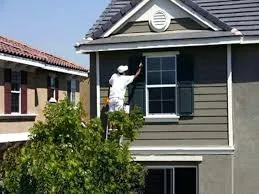
The outside of a Manhattan building is brick, stone, wood trim and iron, not siding. We paint front doors, window trim, cornices, stoop railings, fire escapes, rear walls and storefronts. Freezing winters, humid summers and sidewalk salt are hard on all of them, so scraping, rust treatment and priming come first. In a historic district we check what the Landmarks Preservation Commission requires before a color changes.
Exterior painting on this island rarely means siding. It means the parts of a townhouse or small building that are made to be painted: the front door and its surround, window sashes and frames, a wood or sheet metal cornice, stoop railings, areaway gates, fire escapes, a rear extension, a stucco garden wall. We also paint brick and masonry that already carries paint. Bare brownstone and unpainted brick are a different matter, and we will tell you plainly when leaving them unpainted is the better choice.
The work is mostly preparation. Old exterior coatings in Manhattan are thick, brittle and often lead-based, so we scrape and sand with lead-safe methods and collect the debris instead of letting it fall onto the sidewalk. Rust on iron is taken back to sound metal and primed the same day. Rotten wood is repaired or flagged for a carpenter. Joints are caulked, bare spots primed, and then two finish coats applied. We pick dry days with mild temperatures, which in New York points to spring through fall.
Rules matter more outside than inside. If your building is an individual landmark or sits in a historic district, the Landmarks Preservation Commission must approve a change of exterior color and any paint on bare masonry, so we ask for the address before we quote. Work above the first floor may call for a scaffold or lift, and that equipment can need its own city permit. You get a written scope, a schedule built around the forecast and a final walk around the building.
Exterior painting in New York: common questions
Can I repaint my brownstone's front door a new color?
If the house is landmarked or in a historic district, ask the Landmarks Preservation Commission first, because a color change on the exterior needs its approval. Repainting in the existing color is simpler. Outside those districts, the choice is yours and your co-owners'.
Should the brownstone facade itself be painted?
We usually advise against painting bare brownstone. The stone needs to release moisture, and a film of paint can trap it and speed up flaking. A facade that is already painted can be repainted with a breathable masonry coating after loose material is removed.
How do you paint a fire escape without making a mess below?
We scrape and wire brush by hand, with tarps and containment under the work area to catch rust and old paint. Then we prime bare steel with a rust-inhibiting primer and brush on the finish. Neighbors and the sidewalk stay protected throughout.
How it works
- Free estimate: Call, text or book online. We walk the job and measure.
- Written quote: Prep, paint and price in writing.
- Prep & protect: We cover floors and furniture, repair and prime surfaces.
- Paint & walk-through: Two coats, clean lines, full clean-up and a final walk-through.